
News & Insights
Product launches, exhibition notes, brand stories and snack ideas from the SOVORA world.
Why Isn't Popcorn Getting Cheaper When Corn Prices Fall?
Every harvest season, when news headlines announce record corn yields and lower grain prices, the same question inevitably follows: "If corn is cheaper, why doesn't popcorn become cheaper too?"
At first glance, the answer seems obvious. Corn is the primary ingredient in popcorn, so lower raw material prices should lead to lower retail prices.
However, modern food manufacturing tells a very different story.
Corn Is Only 10% of the Total Cost
One of the biggest misconceptions about popcorn production is that corn represents the majority of its manufacturing cost.
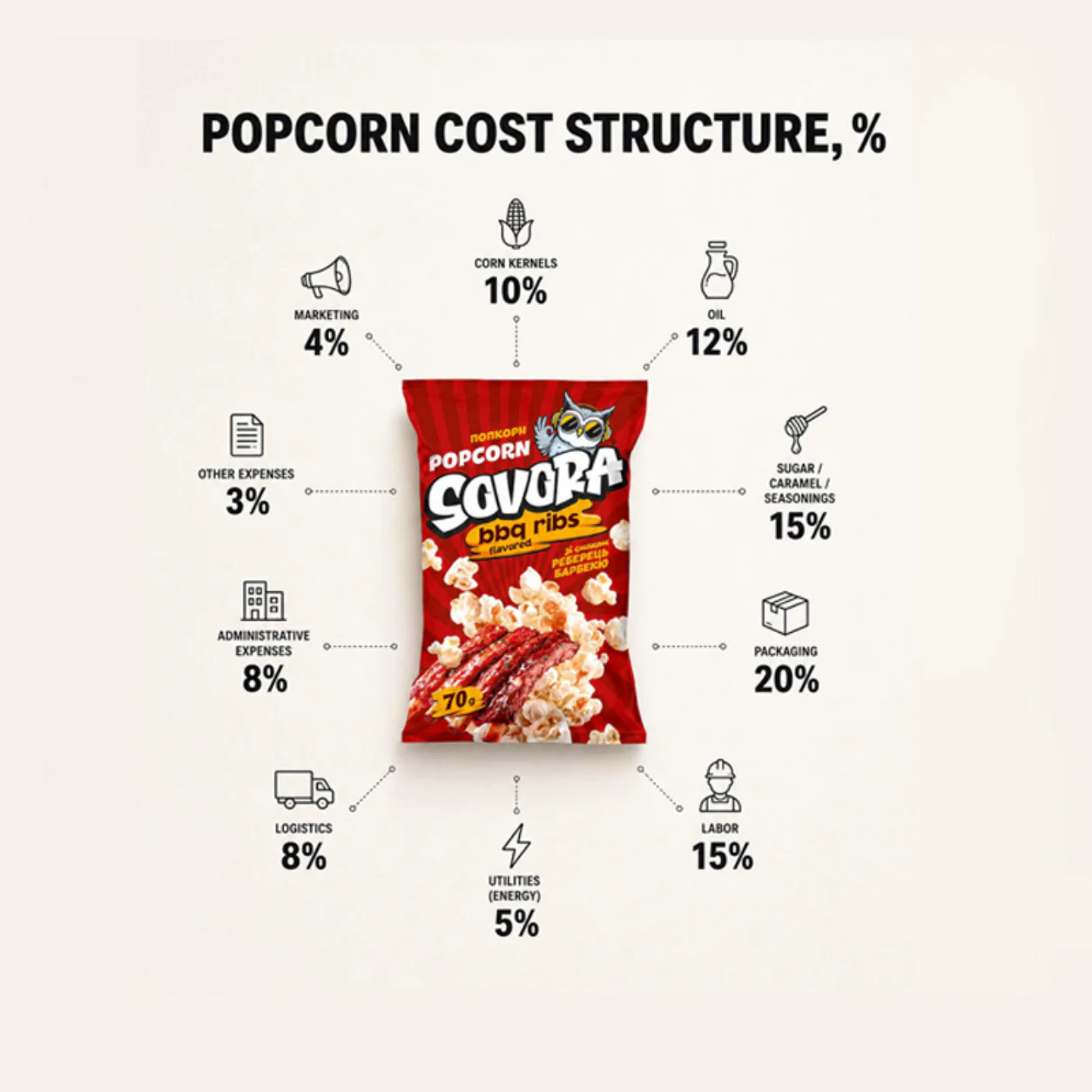
In reality, corn kernels account for only around 10% of the total production cost.
The remaining 90% comes from numerous other components required to produce, package, transport, and market a finished product.
Typical Cost Structure of Popcorn Production
| Cost Component | Share |
|---|---|
| Packaging | 20% |
| Sugar / Caramel / Seasonings | 15% |
| Labor | 15% |
| Oil | 12% |
| Corn Kernels | 10% |
| Administrative Expenses | 8% |
| Logistics | 8% |
| Utilities (Energy) | 5% |
| Marketing | 4% |
| Other Expenses | 3% |
As the breakdown shows, packaging alone costs twice as much as the corn itself.
Why Retail Prices Don't Fall
Even if corn prices decline significantly after a strong harvest, manufacturers continue to face rising costs in other critical areas.
Among the largest cost drivers are:
- Packaging materials
- Vegetable oil
- Flavorings, sugar, and seasonings
- Employee wages
- Transportation and logistics
- Electricity and utilities
- Administrative operations
- Marketing and brand development
When these expenses continue to increase, the savings from cheaper corn are often too small to meaningfully reduce the overall manufacturing cost.
The Economics Have Changed
Years ago, fluctuations in agricultural commodity prices had a much greater impact on the final price of food products.
Today, manufacturing is far more complex.
Packaging innovation, higher labor costs, stricter food safety requirements, rising energy prices, and increasingly sophisticated supply chains mean that the value added after harvesting corn is substantially greater than the cost of the raw material itself.
As a result, popcorn pricing is no longer determined primarily by the price of corn.
A Good Harvest Still Matters
A strong corn harvest is certainly good news for the industry.
Lower corn prices help manufacturers reduce pressure on production costs and can slow future price increases. They also improve supply stability and reduce the risk of raw material shortages.
However, a cheaper harvest does not automatically translate into cheaper popcorn on the supermarket shelf.
Looking Beyond the Field
Modern popcorn is the result of an extensive value chain that begins with corn farming but continues through processing, flavor development, packaging, quality control, logistics, retail distribution, and marketing.
Understanding where production costs actually come from helps manufacturers, retailers, distributors, and consumers make better-informed decisions.
The next time corn prices make the headlines, it's worth remembering one important fact:
Corn may be the ingredient that starts the process, but it represents only 10% of the total cost. The remaining 90% is created throughout the journey from the field to the retail shelf.
The World's Most Popular Popcorn Flavors: What Consumers Prefer Across Different Regions
Popcorn has evolved far beyond being just a movie theater snack. Today, it is one of the fastest-growing categories in the global snack industry, with manufacturers continuously introducing new flavors, ingredients, and packaging formats to meet changing consumer preferences. According to industry research, the global popcorn market exceeded USD 7 billion in 2025 and is projected to reach USD 13.6–15.5 billion by 2033–2034, growing at a compound annual growth rate (CAGR) of approximately 9%. This makes popcorn one of the most dynamic segments within the snack industry.
However, consumer taste preferences vary significantly across regions.
North America: The Home of Classic Popcorn
North America remains the world's largest popcorn market, accounting for approximately 42–48% of global sales. Popcorn has become deeply embedded in the region's culture, from movie nights and sporting events to everyday snacking.
The most popular flavors include:
- Butter
- Caramel
- White Cheddar
Other popular varieties include:
- Cheddar Cheese
- Sea Salt
- Kettle Corn (Sweet & Salty)
- Buffalo Ranch
- Jalapeño
- Hot Honey
Market research consistently shows that Butter remains the best-selling flavor, while caramel and cheese continue to be among consumers' favorites. At the same time, demand for bold and innovative flavor combinations continues to grow.
Europe: Premium Flavors and Gourmet Innovation
The European popcorn market follows a different trend.
Consumers increasingly seek premium products with sophisticated flavor profiles rather than traditional recipes.
The most popular flavors include:
- Salted
- Caramel
- Cheese
- BBQ
- Butter
Premium brands are also introducing gourmet varieties such as:
- Truffle
- Goat Cheese
- Sea Salt
- Sweet Chili
- Honey Mustard
These products are particularly popular in the United Kingdom, Germany, France, and the Benelux countries, where consumers are willing to pay more for premium ingredients and unique flavor experiences.
Asia: Sweet Flavors Continue to Dominate
Asia is currently one of the fastest-growing popcorn markets in the world.
Growth is driven by several factors:
- Expansion of modern retail channels
- Rapid growth of the cinema industry
- Increasing demand for convenient ready-to-eat snacks
The most popular flavors include:
- Caramel
- Honey Butter
- Sweet Corn
- Seaweed
- Cheese
- Matcha
- Chocolate
In many Asian countries, caramel popcorn remains the most recognized and widely consumed flavor, while savory and spicy varieties continue gaining popularity as Western snack trends expand across the region.
Why Cheese Flavors Continue to Grow
A decade ago, cheese popcorn occupied only a niche segment of the market.
Today, it has become one of the world's leading flavor categories.
Several factors explain its growing popularity:
- Rich, satisfying taste
- Broad consumer appeal
- Perfect pairing with movies and sporting events
- Strong demand among younger consumers
The most popular cheese varieties include:
- Cheddar
- White Cheddar
- Cheese Blend
In many countries, cheese popcorn has become the second most popular category after classic butter popcorn.
BBQ: One of the Fastest-Growing Flavor Trends
Over the past few years, BBQ flavors have experienced remarkable growth across multiple continents.
Consumers increasingly seek bold, smoky, and savory flavor profiles.
Popular BBQ-inspired varieties include:
- BBQ Ribs
- Smokehouse BBQ
- Honey BBQ
- Smoky Bacon BBQ
These flavors are especially attractive to younger consumers looking for exciting new taste experiences.
Caramel Remains a Global Classic
Despite the continuous introduction of new flavors, caramel popcorn remains one of the most popular choices worldwide.
Its enduring success can be attributed to several factors:
- Appeals to both children and adults
- Strong association with movie theaters
- Excellent compatibility with chocolate and nuts
- A long-standing tradition in the snack industry
For many consumers, caramel popcorn is the first sweet popcorn flavor they ever experience.
Key Trends Shaping the Future of the Popcorn Market
Analysis of leading snack manufacturers and industry reports highlights several long-term trends:
- Growing demand for innovative flavors
- Increasing popularity of sweet-and-savory combinations
- Expansion of the premium snack segment
- Greater use of natural ingredients
- Continued growth of the ready-to-eat popcorn category
- Development of functional snacks with improved nutritional profiles
Conclusion
Although consumer preferences vary across countries and regions, several flavors consistently remain global favorites.
The World's Top 7 Popcorn Flavors
- Butter
- Caramel
- Cheese / White Cheddar
- Salted
- BBQ
- Sweet & Salty
- Honey Butter and other regional sweet varieties
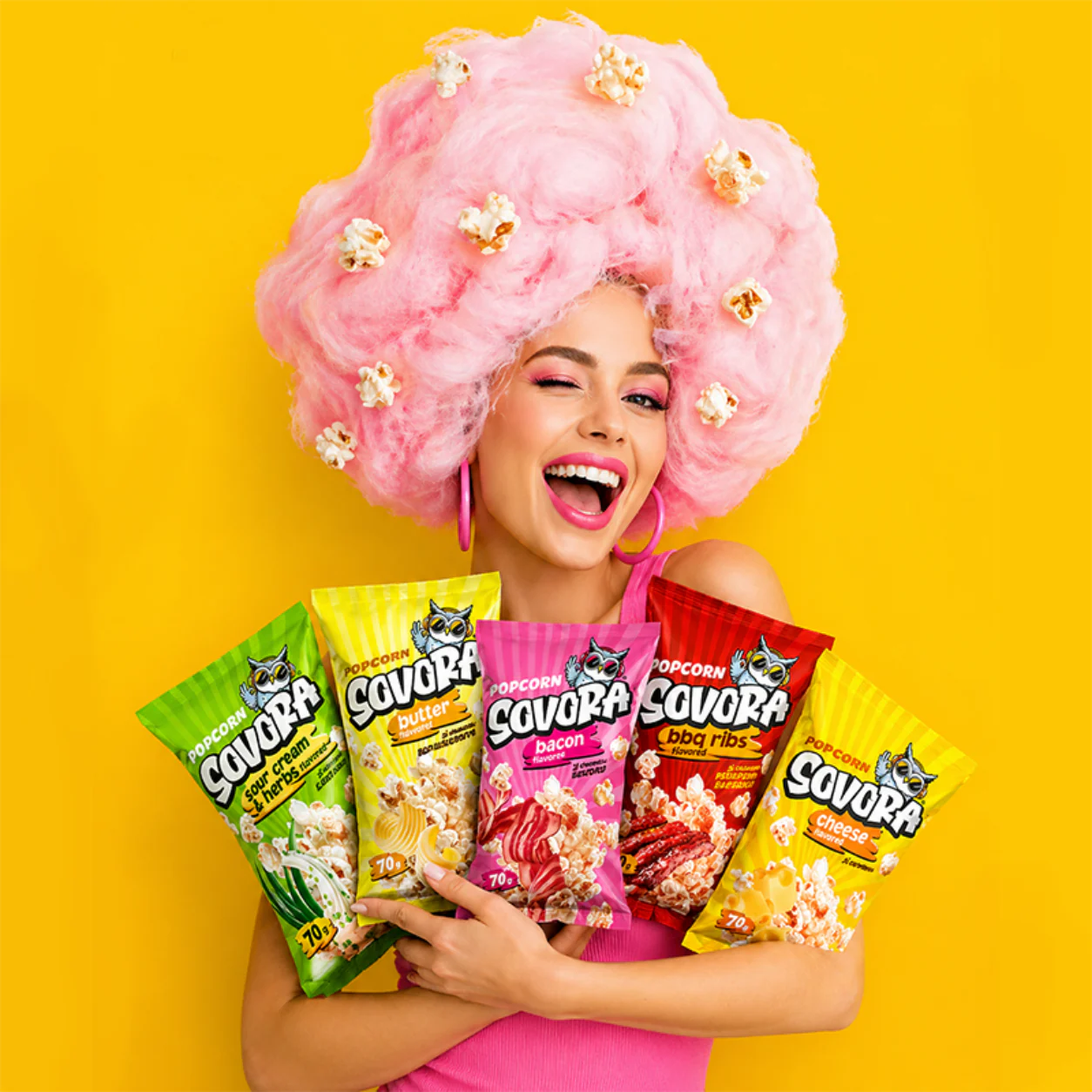
The global popcorn market continues to evolve rapidly as consumers seek greater variety and new flavor experiences. While classic flavors such as Butter, Caramel, and Cheese remain market leaders, modern varieties including BBQ, Bacon, Sour Cream & Herbs, and Honey Butter are driving innovation and helping manufacturers successfully compete in both domestic and international markets.

What Makes International Food Exhibitions So Valuable for Manufacturers?
Beyond the Booth: How Trade Shows Create Long-Term Business Opportunities Every year, thousands of food manufacturers invest significant resources to participate in international exhibitions. At first glance, a trade show may look like several days of product presentations and networking.
In reality, it is much more than that.
For manufacturers aiming to expand internationally, exhibitions are among the most effective business development tools available. They bring together decision-makers, shorten sales cycles, provide direct market feedback, and create opportunities that often take months—or even years—to achieve through traditional sales channels.
Warsaw Food Expo 2026 was another excellent example of this.
One Exhibition — Hundreds of Business Opportunities
Unlike traditional sales activities, international exhibitions gather the entire food supply chain under one roof.
During just a few days, manufacturers have the opportunity to meet:
- retail chains;
- distributors;
- importers;
- wholesalers;
- private label buyers;
- food service companies;
- industry experts.
Instead of spending months arranging individual meetings across different countries, companies can establish dozens of valuable contacts in a single event.
This dramatically improves the efficiency of international business development.
Face-to-Face Meetings Build Trust Faster
Despite the growth of digital communication, personal meetings remain one of the strongest drivers of successful B2B partnerships.
Meeting a supplier in person allows buyers to:
- evaluate product quality;
- discuss commercial terms directly;
- ask technical questions;
- assess production capabilities;
- understand the company behind the brand.
Many long-term partnerships begin with a single conversation at an exhibition booth.
Products Speak Better Than Catalogues
Food products are meant to be experienced.
Taste, texture, aroma, appearance, and packaging all influence purchasing decisions.
At Warsaw Food Expo 2026, visitors had the opportunity to discover our portfolio, including:
- XXLong Chips
- Caramelized Popcorn
- Salted Popcorn
- Microwave Popcorn
- Cotton Candy
- Spices & Seasonings
Live product demonstrations create a level of engagement that cannot be achieved through emails or online presentations alone.
Every Conversation Is Market Research
International exhibitions provide immediate feedback from different markets.
Every question asked by a visitor helps manufacturers better understand:
- consumer preferences;
- packaging expectations;
- flavor trends;
- pricing requirements;
- retailer demands.
This real-time market intelligence often becomes as valuable as the commercial opportunities themselves.
Export Growth Starts With Relationships
Research consistently shows that companies investing in international trade exhibitions tend to expand their export networks more rapidly than those relying solely on remote sales channels.
The reason is simple:
Business relationships develop faster when both parties can meet, discuss opportunities, and build confidence face to face.
For manufacturers entering new markets, exhibitions frequently become the starting point for long-term cooperation.
More Than Orders—Building a Brand
Trade shows are not only about immediate sales.
They also strengthen brand visibility.
Every visitor who discovers a company today may become:
- tomorrow's customer,
- next year's distributor,
- a future retail partner,
- or an advocate for the brand within their market.
Brand recognition grows with every conversation, product tasting, and business meeting.
Looking Ahead
Warsaw Food Expo 2026 provided an excellent opportunity to strengthen existing partnerships while opening doors to new markets.
Throughout the exhibition, our team held numerous productive meetings, discussed future cooperation with distributors and retailers, and introduced visitors to our expanding portfolio of snack products and seasonings.
We sincerely appreciate everyone who visited our stand and shared their time, ideas, and business interests with us.
The exhibition may be over—but the conversations have only just begun.
Our team is already following up with partners, exploring new projects, and turning promising meetings into long-term business relationships.
Because the real value of an international exhibition is measured not by the number of days it lasts, but by the partnerships it creates for years to come.
Why Do Some Potato Snacks Become Best Sellers While Others Disappear?
Every year, thousands of new snack products are launched worldwide. Yet only a small percentage become long-term successes. The global potato chips market is expected to exceed USD 45 billion by 2030, while the broader savory snacks category continues to grow as consumers increasingly seek convenient, ready-to-eat foods. Competition has never been stronger.
This raises an important question:
What separates a successful potato snack from one that simply gets lost on the shelf?
The answer is no longer just price.
Today's consumers evaluate quality before they become loyal customers, and retailers look for products that generate repeat purchases rather than one-time sales.
Consumers Expect Real Potato Taste
One of the biggest trends in the snack industry is the growing demand for products made with simple, recognizable ingredients.
Consumers increasingly prefer snacks with a high potato content because they deliver a richer flavor, better texture, and a more authentic eating experience.
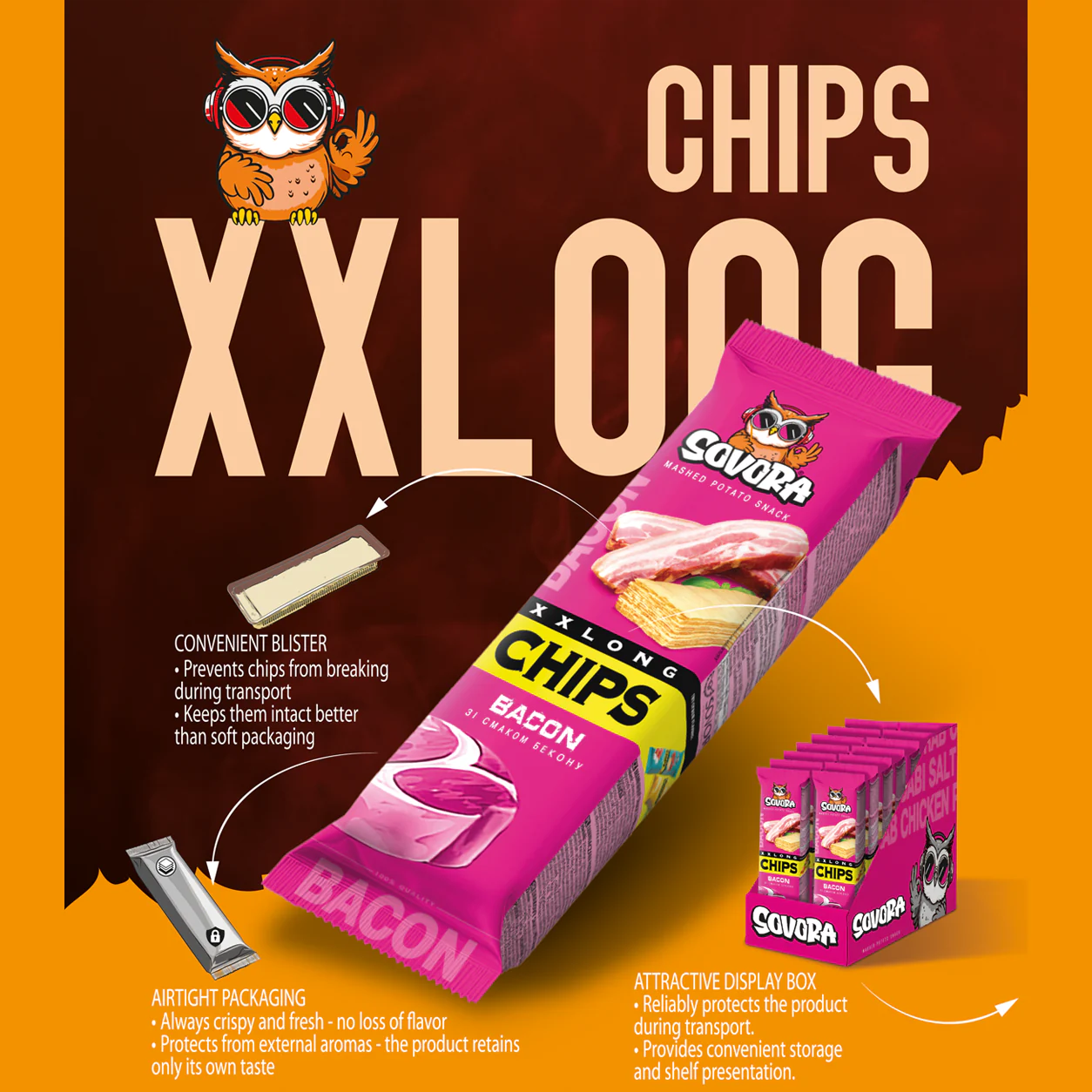
SOVORA XXLong Chips are produced with up to 99.3% premium potato flakes, creating the crispy texture and natural potato taste consumers expect from a high-quality potato snack.
Quality Starts With the Right Oil
The frying oil has a significant impact on taste, texture, shelf life, and overall product quality.
That is why SOVORA XXLong Chips are fried in high oleic sunflower oil, known for its excellent frying stability and consistent performance.
The result is:
- consistent golden color;
- crispy texture;
- rich flavor;
- reliable quality in every production batch.
Packaging Sells Before Taste Does
Studies show that shoppers typically spend only a few seconds deciding which snack to pick from a crowded shelf.
Packaging has become one of the most powerful marketing tools in the snack industry.
To meet different retail requirements, SOVORA XXLong Chips are available in several packaging formats:
- Cardboard Pack – 50 g
- Soft Pack – 50 g
- Soft Pack / Blister – 70 g
Each format is designed to maximize shelf visibility while protecting product quality.
Built for International Markets
For retailers and distributors, product quality alone is not enough.
Reliable logistics are equally important.
Hermetically sealed packaging keeps SOVORA XXLong Chips fresh for up to 12 months, making the product suitable for international transportation and long-distance export.
A longer shelf life reduces waste, simplifies inventory management, and creates greater flexibility for distributors worldwide.
Flavors That Match Local Consumer Preferences
Consumer tastes vary across different regions.
While Cheese and BBQ remain global favorites, other markets increasingly demand flavors such as Mushroom, Wasabi, Chicken, Crab, Paprika, Bacon, and Sour Cream & Herbs.
To meet diverse market expectations, SOVORA XXLong Chips are available in a wide range of flavors, allowing distributors and retailers to select the assortment that best fits their local consumers.
Why Retailers Choose Products That Deliver More Than Taste
Successful snack products create value throughout the supply chain.
Retailers are looking for products that:
- attract attention on the shelf;
- encourage repeat purchases;
- offer consistent product quality;
- simplify logistics;
- support long-term category growth.
These are exactly the principles behind SOVORA XXLong Chips.
With up to 99.3% potato content, premium ingredients, high oleic sunflower oil, attractive packaging, a wide variety of flavors, and a shelf life of up to 12 months, they are designed to meet the expectations of both consumers and business partners worldwide.
How Retail Partnerships Drive FMCG Growth: Why Supermarket Listings Matter More Than Ever
From Shelf Presence to Consumer Trust For every food manufacturer, getting a product onto a supermarket shelf is a major achievement. But securing a listing with a leading retail chain is about much more than increasing sales—it is about building consumer trust, strengthening brand recognition, and creating opportunities for long-term growth.
According to market research, supermarkets and hypermarkets account for more than 55% of global packaged food sales, making modern retail one of the most influential sales channels in the FMCG industry. For snack manufacturers, a presence in a major retail chain can significantly increase brand visibility and accelerate consumer adoption.
Why Retailers Choose New Brands
Retailers receive hundreds of product proposals every year, yet only a small percentage become part of their assortment.
Before introducing a new product, retailers evaluate several key factors:
- consistent product quality;
- reliable manufacturing capacity;
- attractive packaging;
- competitive pricing;
- consumer demand;
- supply chain stability;
- category growth potential.
A successful listing is the result of months of preparation, quality assurance, negotiations, and strategic planning.
Distribution Is About More Than Sales
Expanding into a national retail chain provides benefits far beyond increased product availability.
Retail partnerships help manufacturers:
- strengthen brand awareness;
- increase consumer confidence;
- gather valuable market insights;
- optimize production planning;
- improve logistics efficiency;
- support future expansion into new regions.
Every new retail location creates another opportunity for consumers to discover a brand for the first time.
Growing Together With Retail Partners
Strong partnerships between manufacturers and retailers create value for everyone involved.
Consumers benefit from greater product choice.
Retailers strengthen their snack assortment with innovative products.
Manufacturers gain wider market access and long-term growth opportunities.
This collaborative approach has become one of the driving forces behind successful FMCG brands across Europe.
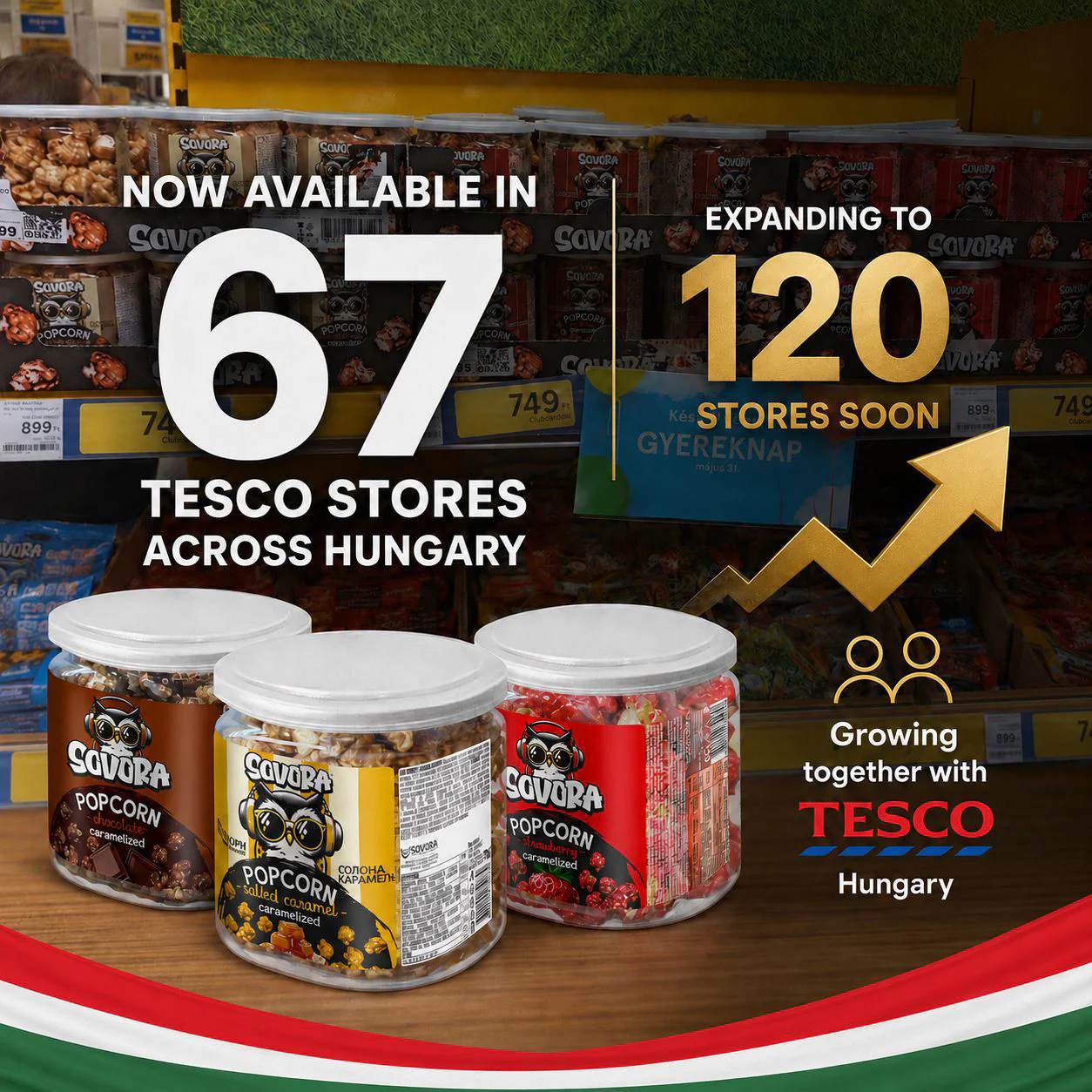
A New Chapter for Caramelized Popcorn in Hungary
A great example of this growth strategy is the recent expansion of SOVORA products in Hungary.
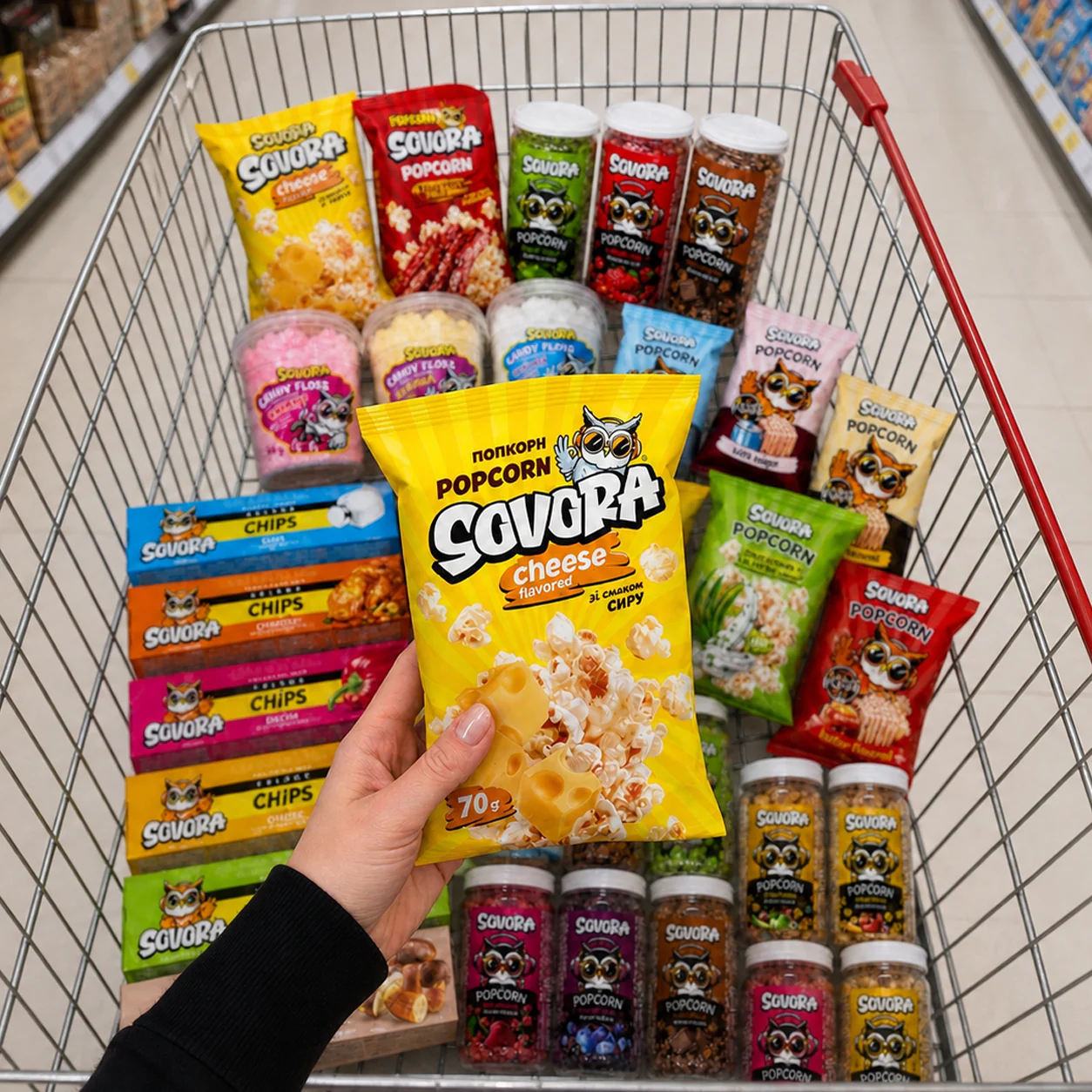
Our caramelized popcorn range is now available in 67 Tesco stores across the country, giving even more consumers the opportunity to discover our products.
This achievement reflects not only growing consumer interest but also the importance of strong cooperation with trusted retail partners.
And this is only the beginning.
Over the coming months, we plan to expand our presence to 120 Tesco stores, making our products even more accessible throughout Hungary.
Looking Ahead
Retail success is never achieved overnight.
It is built through product quality, consistency, innovation, and strong partnerships.
As consumer expectations continue to evolve, manufacturers that invest in quality products and long-term retail relationships will be best positioned for sustainable growth.
At SOVORA, we remain committed to developing innovative snack products and building lasting partnerships that create value for retailers, distributors, and consumers across Europe.

The Sweet Evolution of Cotton Candy: Why This Classic Treat Is Winning Over a New Generation
From Fairgrounds to Supermarket Shelves For more than a century, cotton candy has been one of the world's most recognizable sweet treats. Once associated almost exclusively with amusement parks, carnivals, and festivals, it has evolved into a growing retail category enjoyed by consumers all year round.
Today, cotton candy is no longer just an impulse purchase at special events. Thanks to advances in food technology, packaging, and flavor innovation, it has become a convenient, ready-to-eat snack available in supermarkets, convenience stores, and online retail channels around the world.
As consumers increasingly seek products that combine nostalgia with new taste experiences, cotton candy is experiencing a remarkable revival.
A Sweet Invention That Changed the Confectionery Industry
Cotton candy was first introduced at the beginning of the twentieth century after the invention of the first electric spinning machine, which transformed ordinary sugar into thousands of delicate sugar strands.
Its light texture, colorful appearance, and unique melting sensation quickly made it one of the most popular treats at fairs and celebrations.
More than 120 years later, the product continues to evolve while preserving the same sense of joy that made it famous.
Why Cotton Candy Remains Popular Today
Consumer preferences have changed dramatically over the last decade, yet cotton candy continues to appeal to both children and adults.
The reasons are simple:
- its light, fluffy texture creates a unique eating experience;
- bright colors immediately attract attention;
- it evokes childhood memories and positive emotions;
- new flavors keep the product exciting.
Research shows that emotional purchasing plays a major role in confectionery sales. Products associated with happy memories often generate stronger consumer engagement than conventional sweets.
Cotton candy is one of the best examples of this trend.
Innovation Is Transforming a Traditional Treat
Modern consumers expect more than a traditional vanilla-flavored product.
Today's cotton candy market is driven by flavor innovation and attractive presentation.
Fruit-inspired flavors, vibrant colors, and premium packaging have transformed cotton candy into a product suitable not only for amusement parks but also for supermarkets, gift shops, cinemas, and seasonal promotions.
Manufacturers continue introducing new concepts to satisfy changing consumer preferences while maintaining the product's simple ingredients and recognizable texture.
Packaging Makes Cotton Candy Ready for Modern Retail
Unlike freshly spun cotton candy, packaged cotton candy offers convenience for both retailers and consumers.
Modern packaging protects the product from moisture, preserves its delicate texture, and extends shelf life.
For retailers, packaged cotton candy offers several advantages:
- easy merchandising;
- convenient transportation;
- reduced product waste;
- attractive shelf presentation;
- year-round availability.
As retail formats continue evolving, packaging has become just as important as the product itself.
Color and Flavor Create Impulse Purchases
Visual appeal has always been one of cotton candy's greatest strengths.
Studies in consumer behavior suggest that purchasing decisions for confectionery products are often made within seconds, with color playing a decisive role.
Bright packaging and recognizable flavors encourage impulse buying, especially among families and younger consumers.
Cotton Candy Beyond Children's Treats
Although traditionally associated with children, cotton candy is increasingly finding new applications.
It is now used:
- as a colorful dessert decoration;
- in gift sets;
- at weddings and celebrations;
- in seasonal retail campaigns;
- as part of premium confectionery concepts.
Its versatility allows retailers to attract consumers across multiple occasions throughout the year.
Bringing Sweet Moments to More Consumers
At SOVORA, we believe that great confectionery combines quality, simplicity, and joyful experiences.
Our cotton candy is produced using carefully selected ingredients and is available in three popular flavors:
- Classic
- Cherry
- Strawberry
- Banana
- Orange
Packed in convenient 30 g buckets, it offers an eye-catching presentation, reliable product protection, and excellent shelf appeal.
Whether displayed in supermarkets, convenience stores, cinemas, or seasonal retail promotions, SOVORA Cotton Candy brings a touch of fun, color, and sweetness to every shopping experience.
Microwave Popcorn Reinvented: More Flavor, Less Oil, Better Experience
There is something special about freshly popped popcorn. Its aroma fills the room, the first pop signals that movie night is about to begin, and within minutes a simple snack becomes part of an enjoyable experience shared with family and friends.
Today, microwave popcorn has become one of the most popular ready-to-make snacks in the world. Consumers appreciate its convenience, while retailers value its long shelf life and growing demand. According to market research, the global popcorn market is projected to exceed USD 13 billion over the next decade, with microwave popcorn remaining one of the fastest-growing segments.
But not all microwave popcorn is made the same.
A Different Approach to Microwave Popcorn
Traditional microwave popcorn usually contains butter, oil and seasonings inside the cooking bag. While this method is common, it often creates two challenges.
During cooking, seasonings may burn, producing an unpleasant smell, while excess oil can leave the finished popcorn overly greasy.
SOVORA Microwave Popcorn takes a different approach.
Instead of placing the seasoning inside the popping bag, every pack includes a separate sachet of flavoring that is added after the popcorn is fully popped.
This simple innovation creates a noticeable difference in both taste and preparation.
Why Does It Matter?
Adding the seasoning after popping provides several important benefits.
✔ Less oil
The popcorn doesn't need to absorb as much fat during cooking, resulting in a lighter, crispier snack.
✔ No burnt seasoning
Since the flavoring is not exposed to microwave temperatures, it keeps its original aroma and rich taste.
✔ Less cooking odor
One of the biggest complaints about microwave popcorn is the strong smell that lingers in the kitchen. By separating the seasoning from the cooking process, unwanted odors are significantly reduced.
✔ Better flavor control
Consumers can mix the seasoning evenly after popping, creating a more balanced taste throughout the entire bag.
Crispy Popcorn Starts With Quality Corn
Great popcorn begins long before it reaches the microwave.
Only carefully selected popcorn kernels can deliver the high expansion, light texture, and satisfying crunch consumers expect.
When combined with the separate seasoning system, every bag offers a consistently delicious snacking experience.
Ready in Just Minutes
Busy lifestyles have increased demand for products that are both quick and satisfying.
Microwave popcorn perfectly matches this trend.
Simply place the bag in the microwave, heat for approximately 2–4 minutes (depending on microwave power), wait until the popping slows to about 2–3 seconds between pops, then carefully open the bag and add the seasoning.
In just a few minutes, fresh, hot popcorn is ready to enjoy.
A Flavor for Every Mood
Different occasions call for different flavors.
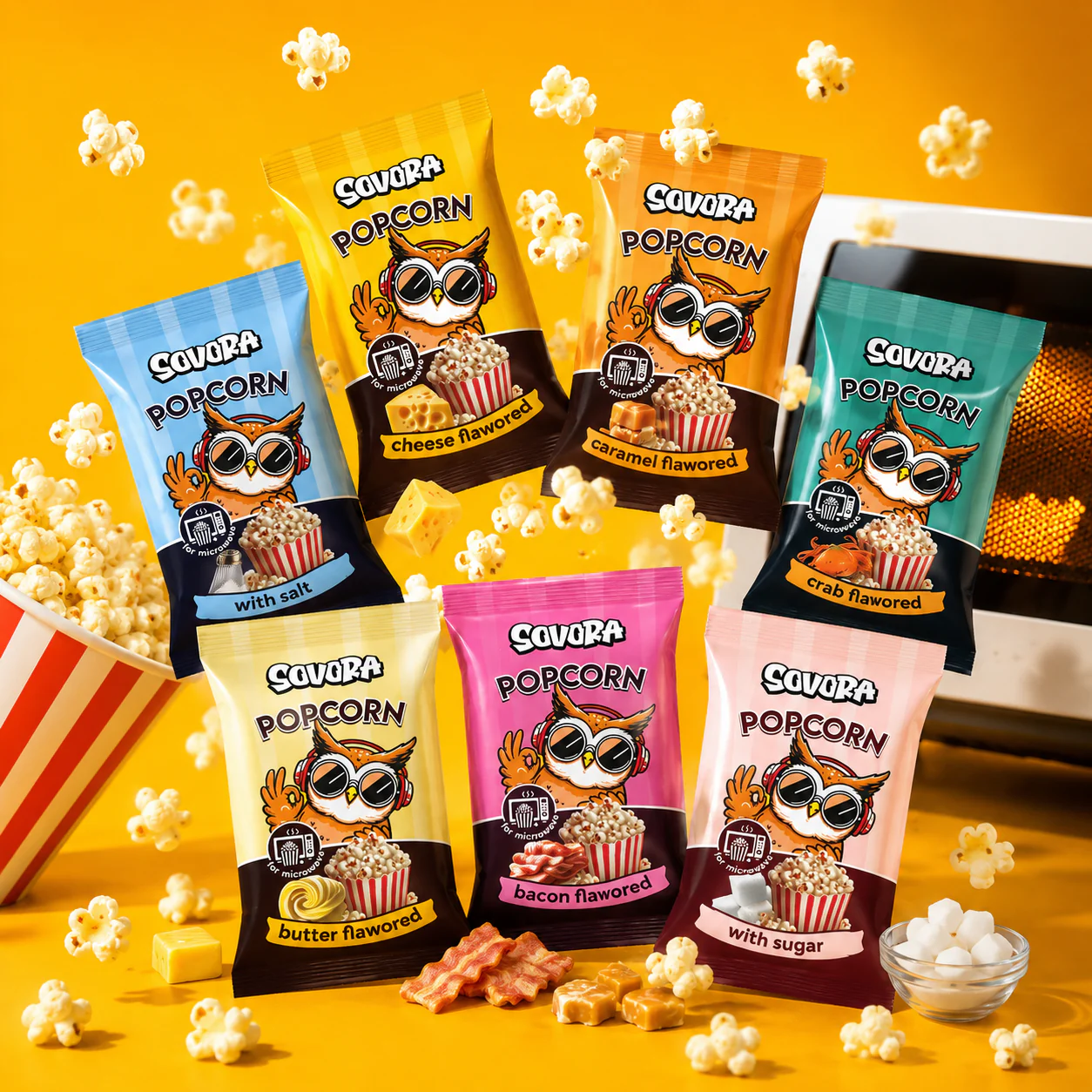
That is why SOVORA Microwave Popcorn is available in a wide variety of options, including:
- Butter
- Salt
- Sugar
- Cheese
- Bacon
- Caramel
- Crab
Whether consumers prefer classic buttery popcorn for movie night or bold savory flavors for sharing with friends, there is a taste for every preference.
More Than Just a Snack
Popcorn has become much more than cinema food.
It is enjoyed during family evenings, sporting events, parties, gaming sessions, office breaks, and everyday relaxation.
Its quick preparation and fresh taste make it one of the most convenient snacks for modern lifestyles.
Experience the Difference
Sometimes, a small innovation creates a much better product.
By separating the seasoning from the popping process, SOVORA Microwave Popcorn delivers a cleaner preparation, richer flavor, lighter texture, and a more enjoyable cooking experience.
Because great popcorn isn't just about popping corn.
It's about creating fresh, delicious moments worth sharing.